FURNACE
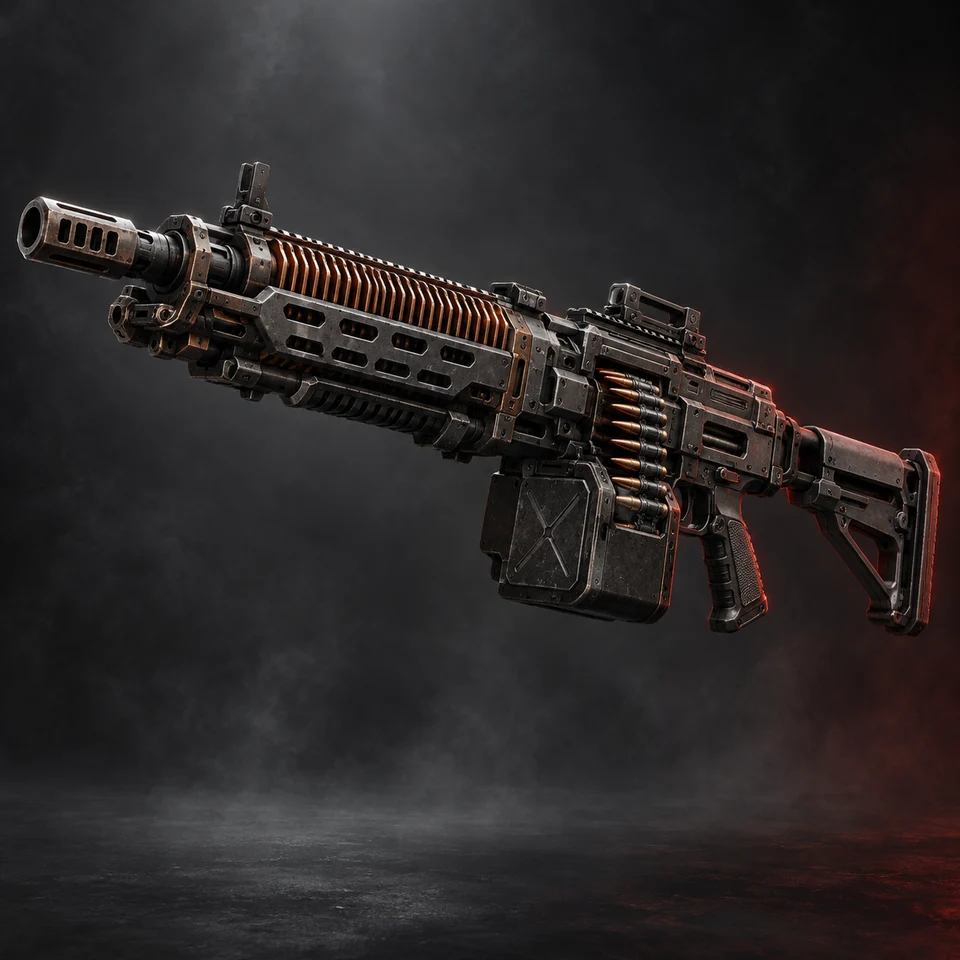
Light machine gun
Free CircuitCopper cooling fins surround a foundry-built receiver. Heat accumulates visibly during fire and must be vented before the mechanism reaches its lockout threshold.
Operating principle
Copper cooling fins surround a foundry-built receiver. Heat accumulates visibly during fire and must be vented before the mechanism reaches its lockout threshold.
Modification choices
A supported grip improves a planted firing lane. A lighter feed unit speeds movement but reduces reserve capacity. A cooling shroud extends a burst while adding weight to the front of the weapon.
Engagement doctrine
Cover a crossing instead of chasing a runner. Trio and Squads can protect the long reload; Solo requires a prepared fallback. PvE suppression works best against advancing light machines while a teammate handles armor.
Strengths, limits & counters
Fast suppression can deny a rush. Wait for the fins to brighten and punish an operator who ignores heat management.
Reading the specifications
Damage is one unarmored torso hit at close range; a burst rifle reports one projectile, not an entire burst. Rate is nominal cycling speed; burst pauses, charging, cooling and reloads reduce sustained output. Capacity counts projectiles, shells or charges per load. Range describes the intended engagement distance. Recoil is a 0–100 control-demand index: lower is steadier, not weaker.
Operators & modes
Recommended operators: KILN, TORQUE. The displayed range is 75 metres in this fictional design. Treat it as a planning guide: sightlines, armor and movement still decide the encounter.