SKIP
Sidearm
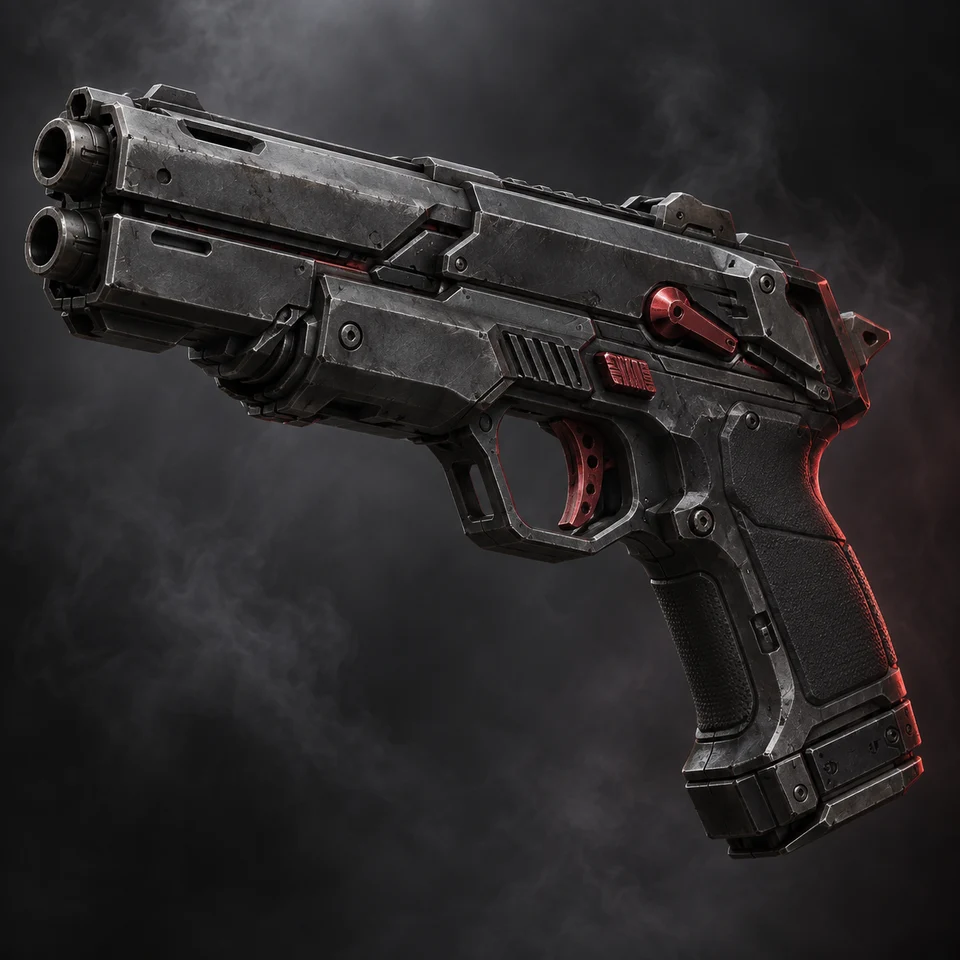
Free CircuitA tiny split-barrel pistol with alternating chambers. Its short slide favors a fast emergency draw, while rapid follow-up shots spread noticeably when fired on the move.
Operating principle
A tiny split-barrel pistol with alternating chambers. Its short slide favors a fast emergency draw, while rapid follow-up shots spread noticeably when fired on the move.
Modification choices
Choose a clear sight for fast presentation or a small optic for measured follow-up shots. A grip sleeve improves control. An extended magazine adds weight and lengthens the draw.
Engagement doctrine
Draw the sidearm when a primary reload would expose you. It suits every mode as insurance, not a reason to abandon cover. In PvE, save scarce primary ammunition on isolated light targets.
Strengths, limits & counters
Fast recovery and low weight suit scouts. At medium distance the compact barrel cannot sustain reliable pressure.
Reading the specifications
Damage is one unarmored torso hit at close range; a burst rifle reports one projectile, not an entire burst. Rate is nominal cycling speed; burst pauses, charging, cooling and reloads reduce sustained output. Capacity counts projectiles, shells or charges per load. Range describes the intended engagement distance. Recoil is a 0–100 control-demand index: lower is steadier, not weaker.
Operators & modes
Recommended operators: MOTH, SABLE. The displayed range is 25 metres in this fictional design. Treat it as a planning guide: sightlines, armor and movement still decide the encounter.